Our story
The Albion, stop by stop
From the railway’s arrival in 1866 to the present day. Every date here comes from the census, the county archives, local historians or the pub’s own photographs. The sources are listed at the end.
Before 1866
A hamlet of potters
Before the railway, Verwood was a small place in the parish of Cranborne, known for its potteries and brickmakers. The 1861 census lists an innkeeper in Verwood, but no hotel.
20 December 1866
The line opens
Nineteen miles of single track opened from Alderbury Junction, near Salisbury, to West Moors, near Wimborne. Verwood had a small station with a passing loop, on the south side of where the Albion stands.
The goods yard had cattle pens, a crane and a coal depot. Farmers sent their milk by train to London and Bournemouth.
1871
The Albion Hotel, first on record
The census of 2 April 1871 lists the Albion Hotel beside the station. Its keeper was John W. Beckingham, 50, from Winchester: licensed victualler and brickmaker. His son Wesley made bricks too.
The hotel stood in the station yard itself, with its own stables, which was unusual for an inn. Next door, at the station, lived Richard J. Chandler, with a young railway clerk as his boarder.
1881 – 1901
Keepers of the station hotel
Each census finds a new name over the door, and the station master close by.
Census Keeper of the Albion Hotel Born 1871 John W. Beckingham, licensed victualler and brickmaker Winchester 1881 Eleanor Gardener, widow, licensed victualler Fovant, Wiltshire 1891 Thomas Harrington, innkeeper Woodgreen, Hampshire 1901 Samuel Parker, licensed victualler Fordingbridge Sources: [1]
Early 1900s
From the platform
Seen from the platform, over the picket fence: the gable with its diamond pattern in the brickwork, still there today. The diamond is in our name.
Sources: [9]
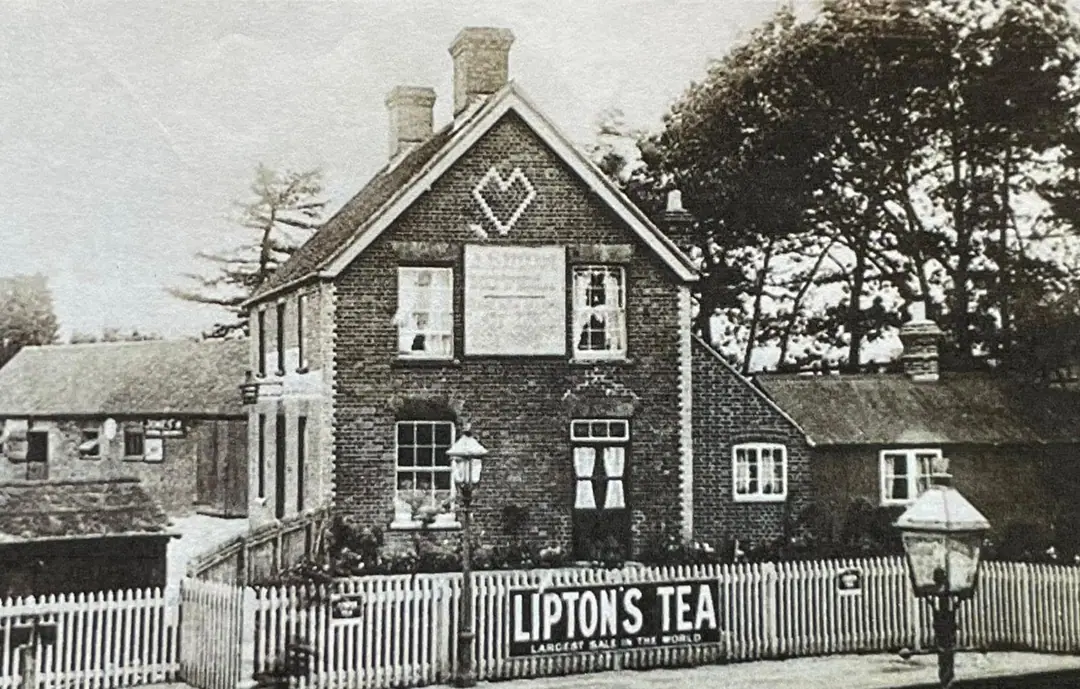
The Albion Hotel from the station platform Royal visits
Kings and queens at Verwood
Verwood was the nearest station to the great houses at Cranborne, Wimborne St Giles and Crichel, so royalty used it too. Queen Alexandra and King George VI were among them.
For one royal arrival, the schoolchildren lined up outside the Albion in their best clothes, the girls in hats.
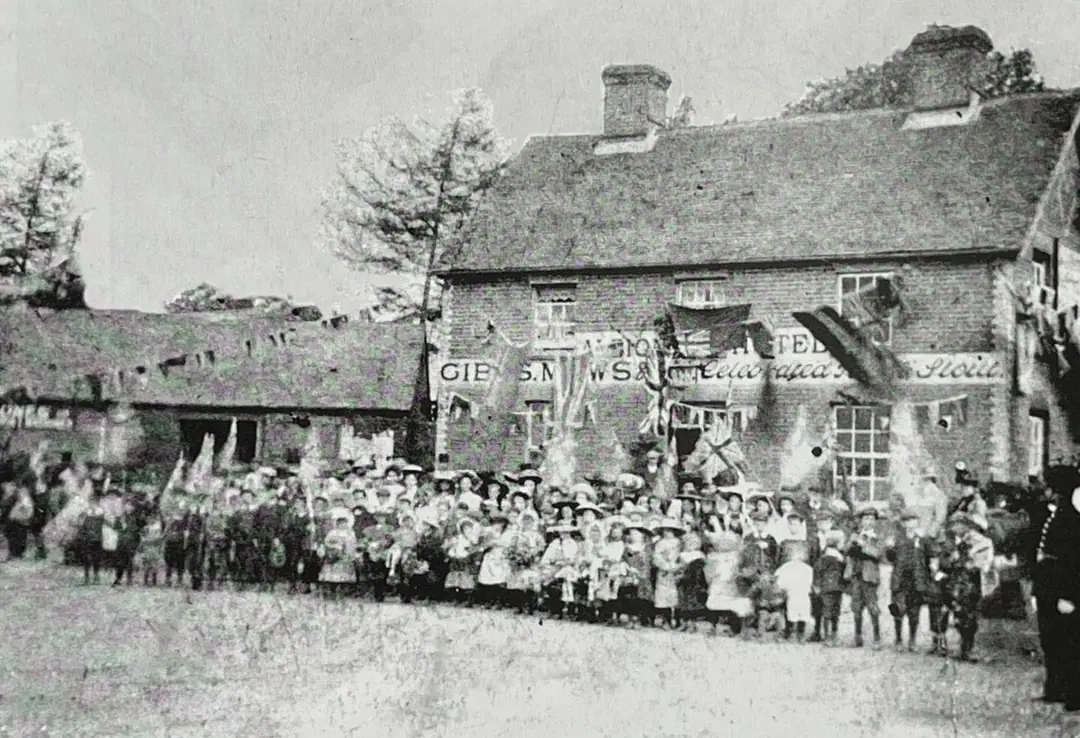
Schoolchildren outside the Albion Hotel, waiting to greet royalty 1910
Staff on the platform
Station staff and platelayers line up for the camera. Behind them, the brick road bridge carries the road over the line. The same bridge still stands at the edge of our garden.
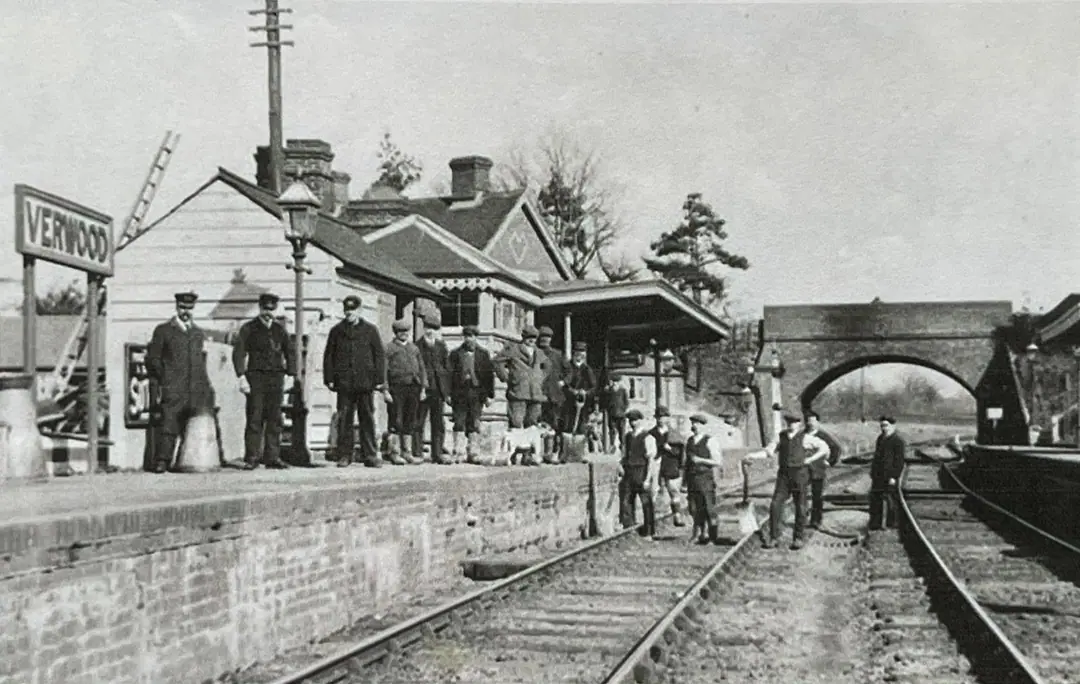
Verwood station, 1910 1925
Gibbs Mew of Salisbury
The papers of the Salisbury brewer Gibbs Mew & Co. include a file on the Albion Hotel, Verwood, from 1925 to 1931. It survives at the Wiltshire and Swindon History Centre.
Sources: [7]
2 May 1964
The last trains
The last passenger trains ran on Saturday 2 May 1964, and every one was full. The line closed on Monday 4 May, one of the Beeching cuts.
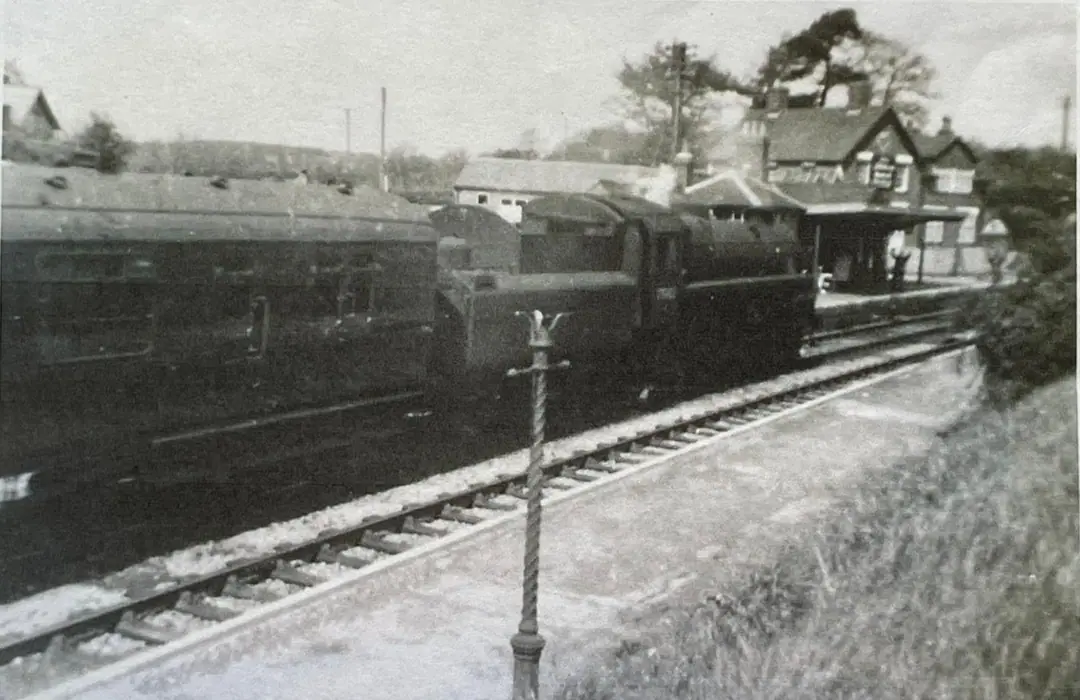
The last passenger train at Verwood, 2 May 1964 1965
The rails come up
The track was lifted the year after closure. The station and the station master’s house were later pulled down, and houses now stand on the old goods yard.
1970s
Still the Albion Hotel
The sign band ran in white letters on navy: Albion Hotel, a Gibbs house. The yard in front was a car park, and the regulars wore flares.
Sources: [9]
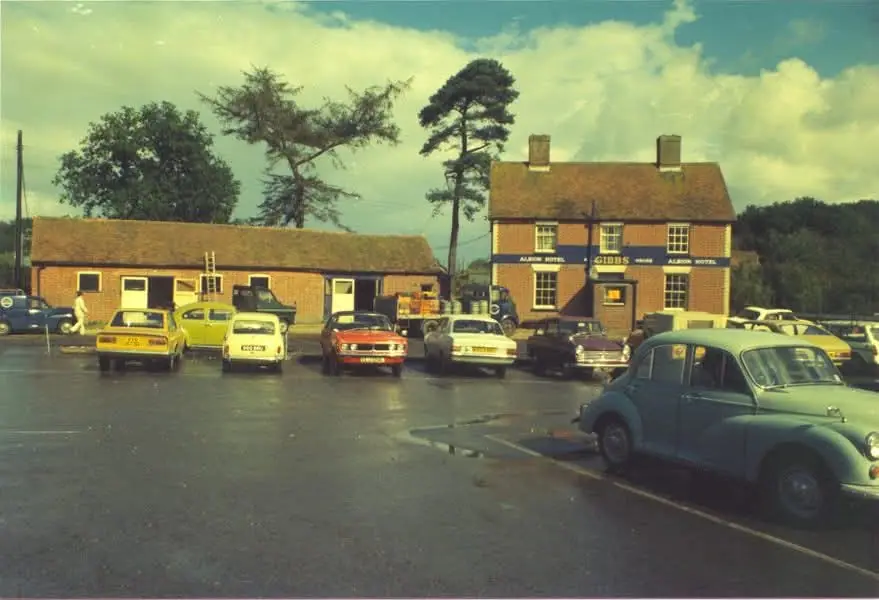
The Albion Hotel in the 1970s 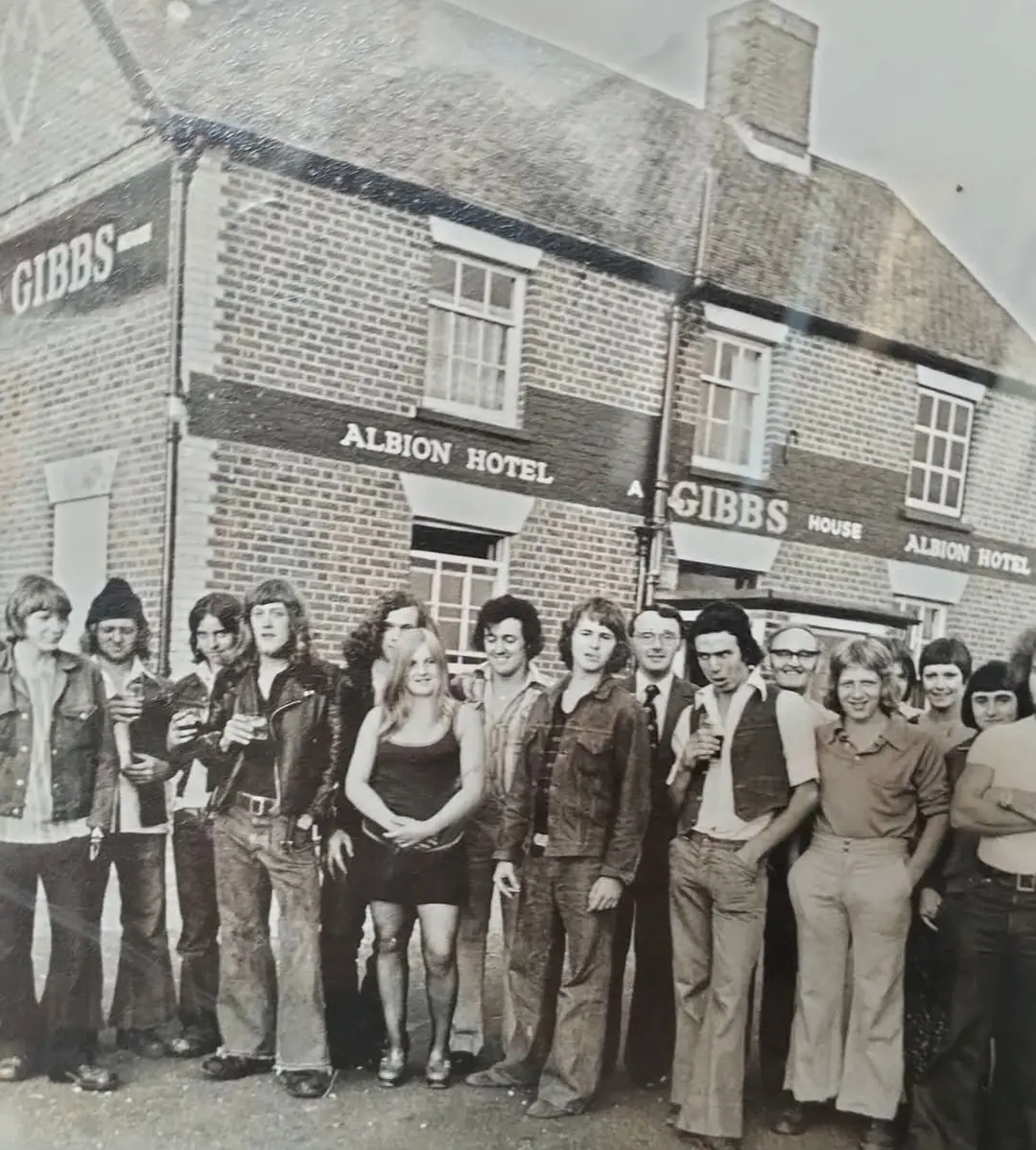
Regulars outside the Albion Hotel 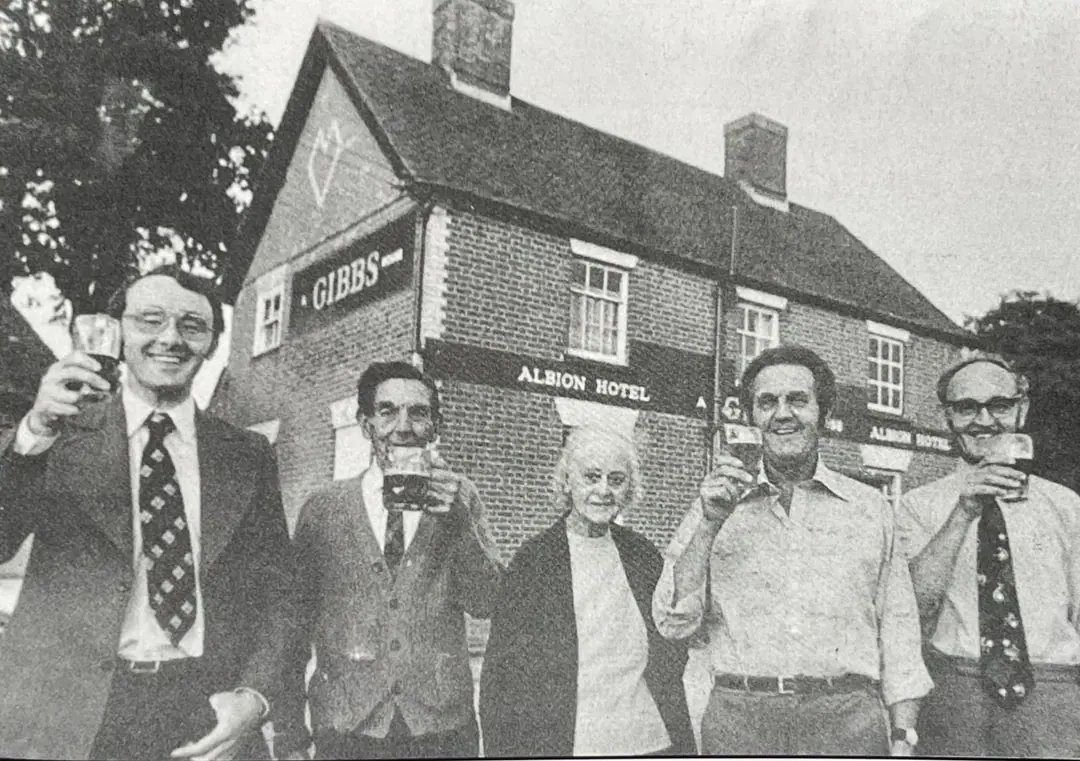
Raising a glass 1990
The road moves
Station Road was realigned to pass the other side of the pub. The old road bridge was left standing, and the space under its arch became part of the garden.
Today
A garden on the old line
The beer garden covers the old station site, and the conservatory stands beside it. Under the arch of the old road bridge is our garden bar.
The hotel rooms are long gone, and with them the word hotel: the Albion Hotel is now the Albion Inn.
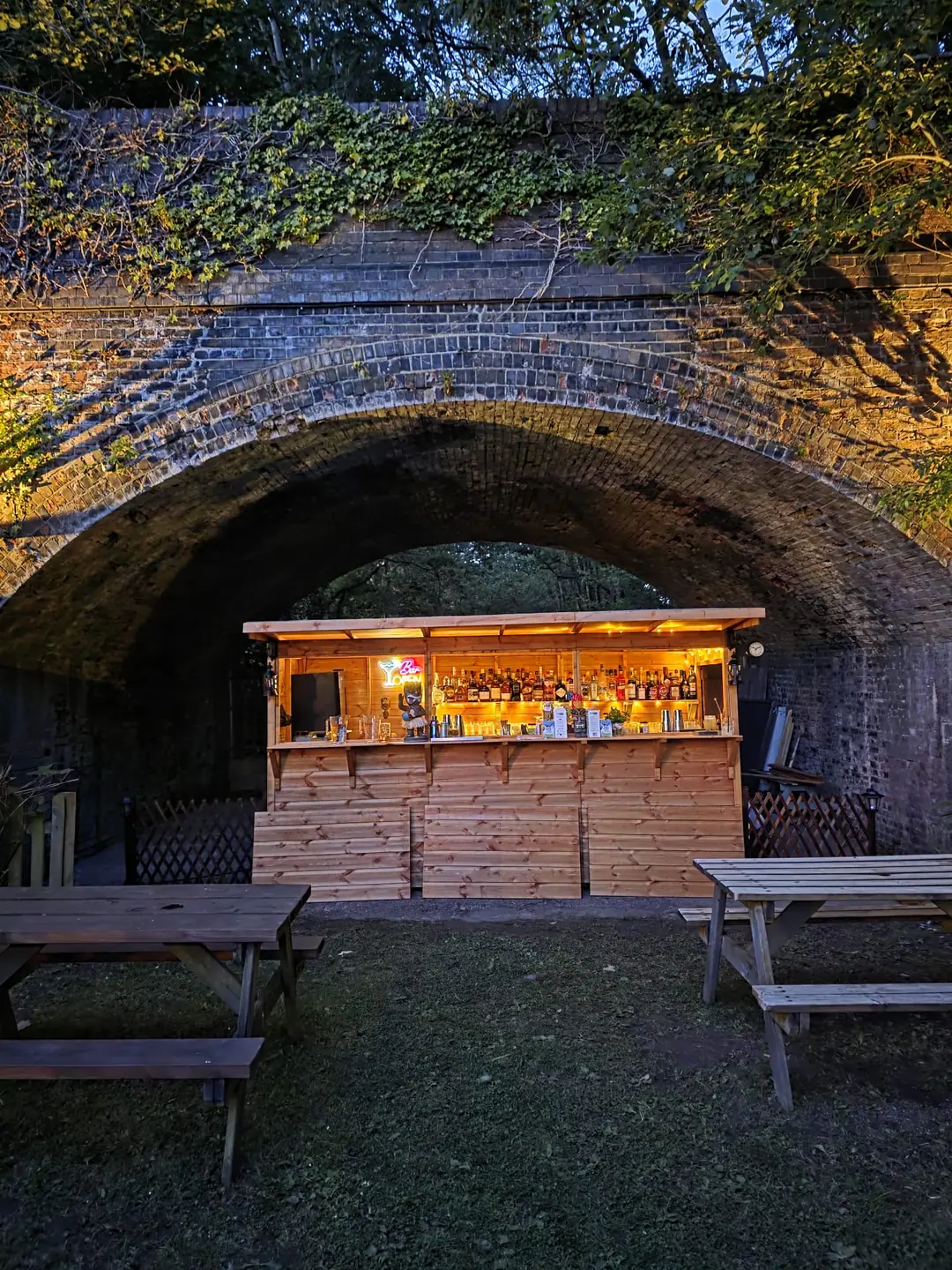
The garden bar under the old road bridge November 2025
A new chapter
The Albion opened its doors again as a family-run pub, under a new sign: a steam engine coming through the smoke, for the railway that built us.
Sources: [9]
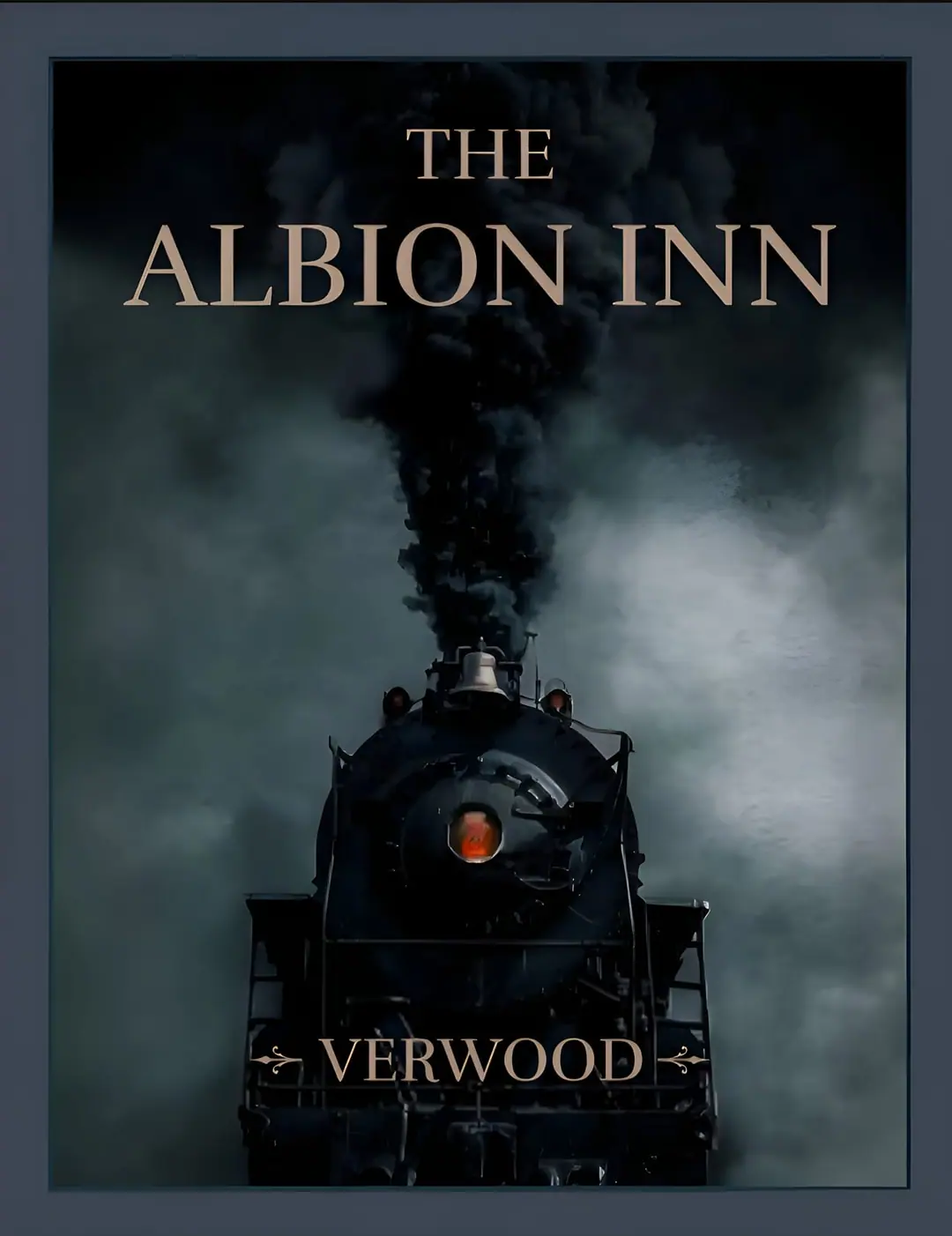
The new sign


Sources
- [1]Verwood census returns 1841–1901, transcribed by the Verwood Historical Society (Dorset OPC)
- [2]Verwood Station, history.verwood.org
- [3]Verwood railway station, Wikipedia
- [4]Verwood history timeline, verwood.org
- [5]Verwood history timeline 1900–1999, verwood.org
- [6]Verwood then and now, Dorset Life
- [7]Albion Hotel, Verwood: Gibbs Mew & Co., 1925–1931 (Wiltshire and Swindon History Centre, 1821/16)
- [8]Albion Inn, Verwood, CAMRA
- [9]Photographs from the Albion’s own collection
The year the Albion was built is not on record. It is not in the 1859 directory or the 1861 census, and it first appears in the census of 2 April 1871. If you know more, or have old photographs of the Albion, we would love to hear from you.
Back to the home page